A smoothly operating lock is synonymous with home security and peace of mind. However, with daily use, dust, temperature changes, and lack of maintenance, keys can start to stick, turn with difficulty, or emit annoying squeaks. Learning how to lubricate a door lock properly not only prevents the stressful situation of getting locked out due to a broken key but also significantly extends the life of your home's hardware.
Many homeowners make the mistake of spraying generic household oil into the cylinder at the first sign of friction, which usually worsens the problem over time by creating a sticky paste with dust. In this article, we explain in detail how to perform professional lubrication step-by-step, which products to use, and which ones to avoid at all costs.
Why does a door lock get stuck or stiff?
Before applying any product, it's useful to understand why door mechanisms lose their original smoothness. Lock cylinders contain small, precision metal components (pins, drivers, and springs) that operate with millimeter-level tolerances. The most common causes of malfunction include:
- Dirt and dust accumulation: Wind, outdoor pollution, and daily key friction introduce tiny particles inside the cylinder.
- Lack of preventive maintenance: Like any machine with metal-on-metal friction, lock parts need lubrication to reduce wear.
- Moisture and rust: On exterior doors exposed to rain and weather changes, moisture promotes corrosion of brass or steel components.
- Using incorrect lubricants: Applying organic oils (like olive oil) or heavy grease attracts dust and creates a solid clog that jams the pins.
- Natural key wear: Keys erode over the years, leaving burrs or losing their original profile, making it difficult to align perfectly inside the lock.
What products should you use to lubricate a lock?
To lubricate a lock like a professional, you can't just use any product lying around in your garage or kitchen. Locksmiths and maintenance specialists primarily use two types of lubricants depending on the door's environment:
1. Powdered Graphite (Dry Lubricant)
Powdered graphite is the gold standard and the most recommended product for lock cylinders. Because it is a dry lubricant, it contains no oils or solvents, meaning it does not attract dust or grime. It is ideal for indoor cylinders and locks that are not directly exposed to damp weather. It is applied by gently puffing a small amount directly into the keyway.
2. Synthetic Lubricant with PTFE (Teflon) or Silicone
Synthetic spray lubricants containing Teflon are excellent for exterior locks exposed to rain or freezing temperatures. They repel water, prevent corrosion, and withstand a wide range of temperatures. Unlike common oils, they leave a dry, non-sticky protective film that facilitates the movement of parts without gathering residue.
Prohibited Products in Locks
Avoid these products at all costs to prevent damaging the cylinder:
- Olive or vegetable oil: They oxidize over time, turn rancid, and form an unmovable sticky crust.
- Mineral grease or petroleum jelly: Their high viscosity completely blocks the delicate internal springs.
- Common wet multi-purpose sprays without Teflon: Although they offer temporary relief, their oily base traps airborne dust quickly, requiring constant reapplication and degrading the lock performance over time.
How to lubricate a door lock step by step
Once you've chosen the right product, the application process is fast and simple. Follow these steps to ensure a perfect result:
Step 1: Preliminary cleaning of the cylinder
If the lock has old grease or built-up dirt, it's a good idea to clean it first. You can blow compressed air into the keyway to clear out loose dust. If you notice sticky residues, spray a fast-drying electronic contact cleaner (zero residue) and let it evaporate fully before lubricating.
Step 2: Applying the lubricant
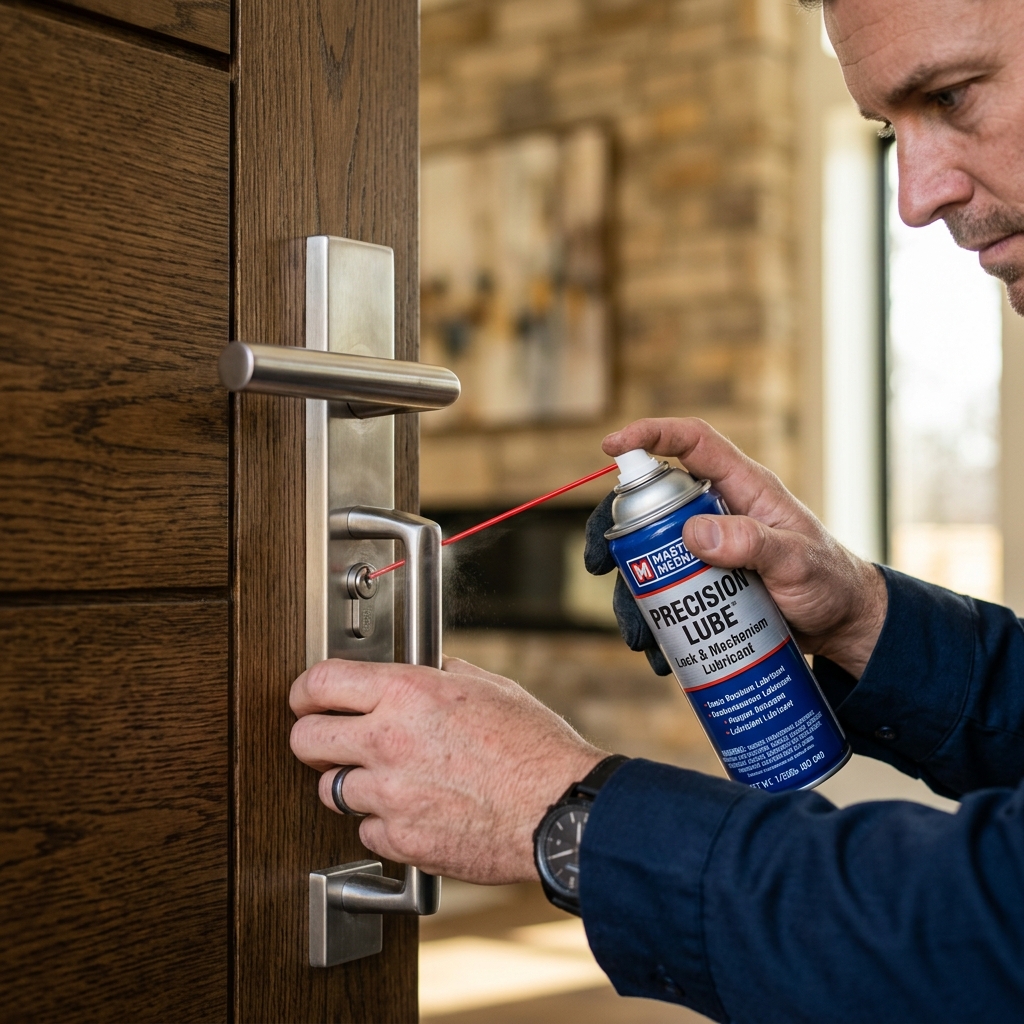
If using powdered graphite, squeeze the applicator gently to puff a small amount into the keyhole. Do not overdo it; a tiny amount is enough. If using a Teflon spray, attach the thin straw to the nozzle, insert it a few millimeters into the keyway, and give it a short spray (less than a second).
Step 3: Distribute the product
Insert the key into the lock and slide it in and out several times. You will feel the lubricant coating the internal pins. Next, turn the key gently in both directions, engaging the entire locking mechanism (the latch and deadbolts). Repeat this turning process 5 to 10 times to distribute the lubricant evenly through all gears.
Step 4: Clean off excess and the key
Remove the key and wipe it with a dry cloth to clear away excess lubricant or dirt pulled from the lock. If you used graphite, be careful when putting the key back in your pocket, as black powder stains easily. Wipe away any drips on the wood or metal of the door as well.
Preventive maintenance for exterior and interior locks
To avoid unexpected breakdowns and emergency calls to locksmiths, we suggest scheduling periodic preventive maintenance:
- Interior passage locks: Lubricating once a year with powdered graphite is enough to keep latches moving smoothly.
- Main and exterior locks: Run the lubrication process twice a year (before winter and summer) using Teflon spray to repel moisture and salt if you live near the coast.
- Key care: Inspect keys for bends or damaged teeth. If a key is difficult to insert, make a copy before it permanently damages the cylinder's internal pins.
Common mistakes to avoid when lubricating your locks
Even with the best intentions, it's easy to make mistakes that shorten the cylinder's lifespan. Remember never to mix graphite with wet liquid lubricants, as this combination creates a thick, destructive paste. Do not apply too much product thinking "more is better"; overload prevents the springs from bouncing back. Finally, never force the key if you feel resistance; try micro-adjustments or call a professional if the jam is mechanical.
When should you replace the lock cylinder instead of lubricating it?
Lubricating the lock will solve most stiffness and noise issues. However, if after applying the product the key still turns without engaging, sticks mechanically, or the cylinder has excessive wiggle, the internal parts are likely worn out or broken. In these cases, for safety and reliability, it is highly recommended to replace the cylinder with a new one featuring modern security measures against techniques like bumping or picking.
Conclusion
Learning how to lubricate a door lock is a simple, low-cost task that significantly improves your home's security. By using the right products, such as powdered graphite or dry Teflon sprays, you will keep your entryways smooth and functional for years.
If after following this guide your lock still resists, the key does not turn properly, or you need expert advice to upgrade your security by installing a high-end anti-bumping cylinder in Madrid, consider delegating the job to experienced professionals. At Handyman Madrid, we have the tools and experience to solve any locksmithing, door adjustment, and general home maintenance issue quickly and professionally.