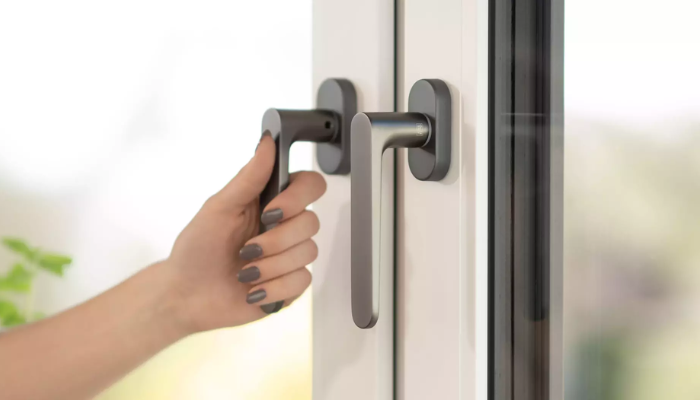
With continuous use, door handles can become loose, turn without actuating the latch, or even get stuck. Most of these incidents have a quick fix if correctly identified. Fixing a handle does not require professional experience, just patience, a screwdriver, and a few minutes of attention.
Diagnosis of the problem
Before dismantling anything, observe the behavior of the handle. If it turns without opening the door, the spindle (the central metal bar) may have come loose. If the handle is loose, it's likely lacking tension in the screws. When the handle is stiff or blocked, it's usually due to dirt, rust, or a damaged internal spring.
Detecting the exact cause will save you time and avoid dismantling more than necessary.
Tools and materials needed
To repair a standard handle, you will only need a screwdriver (flat and Phillips), an Allen key (if the handle has hidden screws), spray lubricant, a cleaning cloth, and, if necessary, a new spindle or fixing kit. It is important to work on a clean surface and keep the screws handy so as not to lose them during the process.
How to remove the door handle
To access the internal mechanism, first remove the trim that covers the screws. On some models, this trim unscrews; on others, it is pried off with a thin screwdriver. Once visible, loosen the screws holding the handle to the door and remove both parts along with the spindle.
Check if the spindle is damaged or worn. If so, replace it with a new one of the same size and thickness. Clean the mechanism housing before reassembling the parts.
Spindle adjustment and retightening of screws
Insert the spindle into the hole of the locking mechanism and place the handles on both sides. Make sure they are aligned and screw them firmly. If the handle has grub screws (Allen head), tighten them until there is no play, but without forcing the metal.
Once fixed, try opening and closing the door several times. The handle should turn smoothly, without rubbing or looseness.
Lubrication of the mechanism
If the handle was stiff or squeaking, apply a multi-purpose lubricant to the latch area and the spindle. Don't use thick oils as they trap dust and shorten the life of the mechanism. A silicone or Teflon spray is ideal for keeping the movement fluid and preventing rust.
Replacing the handle if it is broken
If after tightening and lubricating the handle it still doesn't work, the inner spring is probably broken. In that case, the best option is to replace the whole assembly. Remove the old knob, pull out the spindle, and attach the new handle by securing the fixing screws. Verify that the new model is compatible with your door's thickness and the type of lock.
Maintenance and prevention of future breakdowns
To prevent the handle from becoming loose or blocked again, it's advisable to check the screws from time to time, especially on frequently used doors. Keep the mechanism lubricated and clean, avoiding dust or moisture accumulation. This preventive maintenance will extend the handle's lifespan and avoid unnecessary expenses.
When to call a professional
If the door has a special lock system, such as handles with a code, mortise mechanisms, or complex internal return springs, it is best to go to a specialized locksmith or handyman. A professional can diagnose the problem and replace only the affected part without damaging the door structure.
Fixing a door handle is a simple job that can be done with basic tools and in a few minutes. The key is to identify the cause of the failure, disassemble carefully, and perform a proper adjustment or replacement. With a little regular maintenance, your handles will always work like the first day.